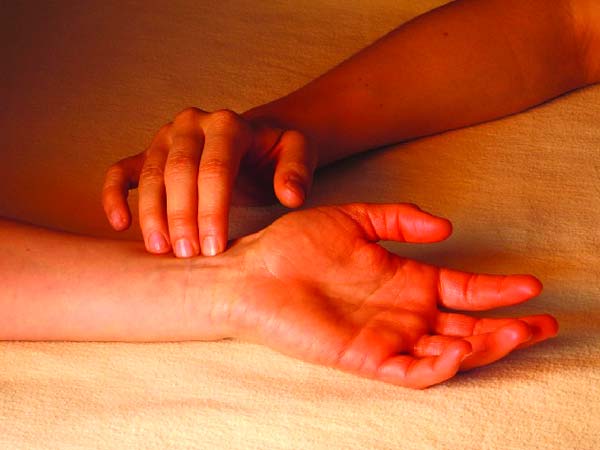
Sparshana or palpation method is one of the methods for assessment of diseases. In this method, the practitioner examines a person by touching.
Sparshana
In Ayurveda, the diagnosis and treatment of disease is always based on the constitution of an individual or on an individual basis. As such, it is known as a highly accurate and personalized method of analyzing every kind of diseases. There are different stages of diagnosis of disease, in ayurveda. The essential element in this type of treatment is to find out the root cause of the disease. Contrary to the popular belief, the root cause of a disease need not necessarily be inside the body. Many a times, the cause may be outside the body. The five method of diagnosis is called nidan panchak. In ayurveda, for assessing the specific symptoms there are three-fold examination, eight-fold examination and ten-fold examination. The three-fold examination, or trividh pariksha as it is called, consists of sparshana (palpation method), darshana (inspection) and prashna (interrogation). To get detailed information about each step of the three-fold examination, read through the following lines.
Stage Before Sparshana - Darshan (Visual Observation)
The first method of clinical assessment in ayurveda, it is the method through which the medical practitioner comes to know of the nature of the disease externally. The patient is assessed for any enlarged or shrinked body parts, symptoms, color and shape of the body, dryness or excessive oiliness and color and features of eyes.
Sparshana (Touching / Palpation Method)
Sparshana is one of the methods from the first triad described in Trividh Pariksha for the assessment of diseases. In this method, the medical practitioner examines a person by touching. The factors, which sometimes cannot be understood by inspection, are better known by palpation. The cognitive organ of touch i.e., the skin carries out this examination. Pulse reading, temperature reading, blood pressure monitoring, coldness, hotness, clamminess, dryness, intolerance to touch, finger test over the eye balls to assess the intraocular pressure, palpation of glands and tumor (gulmalgranthi), palpation and percussion of ascitis qalodara are tools for diagnosis. The factors understood by palpation are:
- Reflexes
- Rigidity or softness of different organs
- Temperature of the body
- Texture of the skin
- Swelling and tumor
- Flatulence and ascites
- Stages of different wounds and ulcers
Stage After Sparshana - Prashna (Questioning)
An important aspect of the whole diagnosis process, in this, the physician is required to ask the patient all the necessary questions in order to treat him/her properly. These questions at times are very beneficial as they enhance the treatment or diagnosis procedure. Interrogation is basically of two types - general and specific questioning.
General Interrogation
- Name, age and address of the patient
- Sex
- Profession
- Present complaint
- Duration of the complaint
- History of the previous illness
- Family history for diseases such as hypertension, diabetes, epilepsy etc
- Individual history - addictions, habits, habitat etc
- Progress of the present complaint
- Any specifications regarding the disease
Specific Interrogation
- Profession
- Financial status
- Addictions, diet and habitat
- Congenital anomalies
- Hereditary diseases
- Previous history of any diseases
- Psychological abnormalities
- Pediatric problems


